

Risk Matrix
Executive Summary
Taiwan's legislature passed a US$24.8 billion special defense budget that funds only US arms purchases, with the opposition cutting domestic drone and asymmetric capability programs in their entirety. The NT$780 billion (US$24 billion) bill, jointly tabled by the Kuomintang (KMT) and Taiwan People's Party (TPP), passed 59-51 on May 8, 2026, with all Democratic Progressive Party (DPP) legislators abstaining in protest. The bill replaces President Lai Ching-te's original NT$1.25 trillion proposal, of which the rejected portion contained the funding for indigenous drone manufacturing, integrated air defense, and command and control. NT$300 billion is earmarked for the December 17, 2025 US arms package (HIMARS, M109A7 howitzers, loitering munitions, Javelins, TOW 2B), and NT$480 billion for an arms package that Washington has not yet announced.
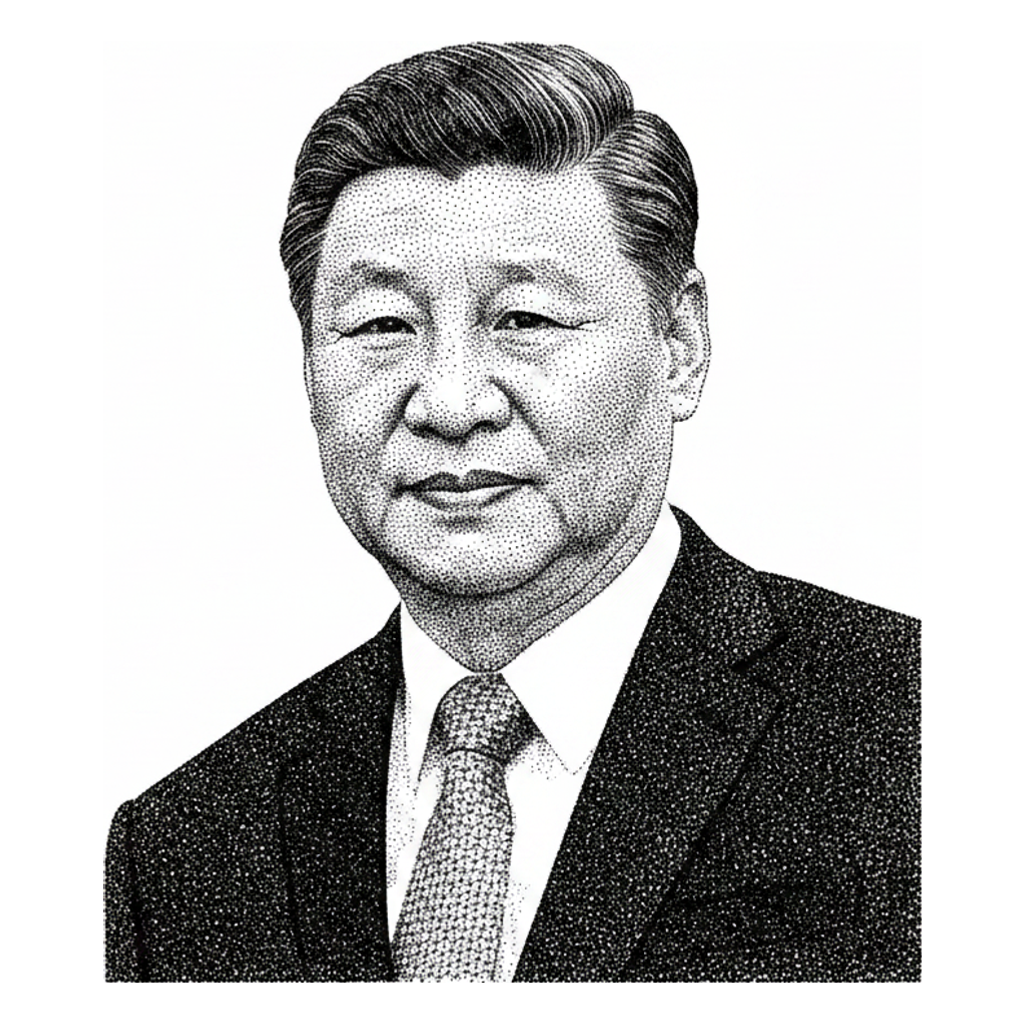
The not-yet-announced package is the roughly US$14 billion PAC-3 and NASAMS sale that Washington is holding back until after Trump's Beijing summit on May 14. A third tranche of approximately US$6 billion in asymmetric capabilities is also pending, putting the total approved-or-near-approved pipeline at roughly US$31 billion across 2025-2026. Xi told Trump in their February 4 call that Taiwan arms sales must be handled with "prudence" and described Taiwan as "the most important issue in China-US relations." The package timing is deliberate. State Department and Pentagon officials have cleared the second package; the question is when, and on what terms, Trump signs out.
The narrow read is a tight post-summit announcement window. The structural read is that the Legislative Yuan vote and the Cheng-Xi meeting are consistent with Beijing's preferred political-warfare path, although they admit a domestic-politics read as well. KMT Chair Cheng Li-wun met Xi at the Great Hall of the People on April 10, the first sitting KMT chair to do so since 2016; the budget vote five days before the summit cut the indigenous defense programs Beijing most wants Taiwan not to build, but the same vote may also reflect KMT-TPP fiscal positioning, anti-DPP coalition bargaining, and electoral calculus that would have produced similar cuts even absent any Beijing alignment. The post-summit announcement window is not solely Trump's call; it runs through Pentagon, State, DSCA, the 30-day Congressional review, and potential senatorial holds. The operative repricing event for institutional capital is therefore a multi-actor process compressed into one calendar period, not a single binary decision.
Forecast Watch
Calibration
Mechanism is established and well-sourced. Horizon depends on a single decision-maker's response to a single 90-minute meeting; that asymmetry is captured by scoring them separately.
Scenarios
Primary: $14B package announced within 30 days of summit, declaratory language unchanged
Trump retains the package as leverage through the meeting, announces post-Beijing as a "post-summit reset" with the standard "does not support Taiwan independence" formula intact. China responds with another round of US-defense-firm sanctions; PLA exercises around Taiwan resume but at the prior baseline rather than a step-up. Reflects continuity with the precedent of arms sales timed around prior Trump-Xi summits and with Pentagon/State having pre-cleared the package.
Alternative: Package delayed beyond 60 days, language hedged
Trump treats the package as a concession asset and either delays the announcement to extract a trade or rare-earths concession, or pairs the eventual notification with softer declaratory language (anything weaker than the standard "does not support" formula, an explicit endorsement of "peaceful resolution" framed in Beijing's preferred way, or no explicit reaffirmation of the Taiwan Relations Act). This is what the CFR and CSIS pre-summit notes flag as the realistic downside for Taipei.
Tail A: Package shelved or restructured
Trump quietly drops or downsizes the $14B package as part of a broader US-China deal. Lockheed and RTX revenue assumptions get walked back. KMT framing of the May 8 budget vote as "responsible cross-strait management" gets retrospective validation.
Tail B: Beijing miscalculates and exercises around Taiwan during or immediately after summit
A face-saving move by the PLA after a summit Beijing perceives as falling short of its declaratory-language goals. Drives a hard repricing of TSMC, shipping insurance around the Strait, and a forced US response on the timing question.
Primary and Alternative are inside the 60/40 band. Treat them as co-equal, not Primary plus footnote. The split between them turns on a single judgment call by one decision-maker. Methodology note: weights are analyst judgments anchored to two priors: prior US-China summit-cycle outcomes where Taiwan packages have been timed to or after major bilaterals (typically within 30-60 days), and the public posture from the Feb 4 Xi-Trump call. Ranges within ±10 percentage points should be treated as inside the noise band. The weights are not Bayesian posteriors, and the document explicitly does not claim them to be.
US Congressional Dynamics
The Executive-branch focus of pre-summit coverage under-weights a real second axis. Even after Trump directs DSCA to notify Congress of the PAC-3/NASAMS package, the package enters a 30-day Congressional review period during which the SFRC, HFAC, and individual senators can place holds or raise objections. The pattern in recent years has been bipartisan support for Taiwan FMS cases, but the same period has seen named senators place holds on other foreign-military-sales cases for unrelated reasons. The realistic scenarios for the Congressional axis run from "expedited approval" through "no notification at all" with three intermediate stops:
- →Expedited: Notification within 14 days; clean 30-day review; smooth contract close.
- →Normal: Notification within 30 days; some committee hearings; minor amendments to package items; 60-90 day total cycle to contract close.
- →Held: Individual senator places a hold (Taiwan-specific or unrelated leverage); 90-180 days total cycle; risk of items dropped.
- →Restructured: Package items renegotiated post-notification due to committee objection; subset proceeds, subset deferred or substituted.
- →Not notified: Trump withholds notification beyond 90 days as part of a broader US-China negotiation. Maps to Tail A.
Watch For (Falsifiable Indicators)
- → Post-summit White House readout language on Taiwan. Retention of "does not support Taiwan independence" confirms Primary. Substitution with "opposes" or any reference to "peaceful unification" without the standard "Taiwan Relations Act" reaffirmation shifts toward Alternative.
- → DSCA Congressional notification of the PAC-3/NASAMS package. Notification within 30 days of summit = Primary; absence at 60 days = Alternative; absence at 90 days = Tail A is materializing.
- → PLA exercise tempo and geometry around Taiwan, May 15-30. Resumption at prior baseline = Primary. A Joint Sword-style major exercise during this window = Tail B emerging. Sustained low tempo for 30+ days = Beijing reading the summit as a win and managing optics.
- → Taiwanese local elections (November 2026) and KMT performance. Per Vektora MC analysis of cross-Strait pathways through 2031, KMT gains in late-2026 local races are the most reliable leading indicator that Beijing's political-penetration path is succeeding without needing a kinetic move. The May 8 budget cut is itself an early reading on that path.
- → Cross-Strait flight diversions or shipping insurance repricing. Any underwriter action on Taiwan Strait routes during the summit window or in the two weeks following is a high-information signal that the institutional market is bidding up the Tail B scenario.
Adversary Regime Status
Tactical Decay
Counterparty positions, package status, named officials, and the package-timing posture are accurate as of May 11, 2026. Expected to require revision within 30 days post-summit as the DSCA notification window opens or closes. Beyond that horizon the structural read (Beijing's preferred non-kinetic path, KMT-DPP split on indigenous defense, TSMC concentration premium) has a longer half-life.
The Signal
Three load-bearing events compressed into 18 days. On April 10, KMT Chair Cheng Li-wun met Xi at the Great Hall of the People in Beijing, the first sitting KMT chair to do so since 2016, with Xi receiving her in a venue typically reserved for visiting heads of state. On May 8, the KMT-TPP majority in Taiwan's Legislative Yuan passed a NT$780 billion ($24.8B) special defense bill that funds US arms only, cutting Lai's NT$1.25 trillion proposal by removing the indigenous drone, integrated air defense, and command-and-control components. On May 13-15, Trump is in Beijing for the first US presidential state visit to China in almost nine years, with the bilateral on May 14.
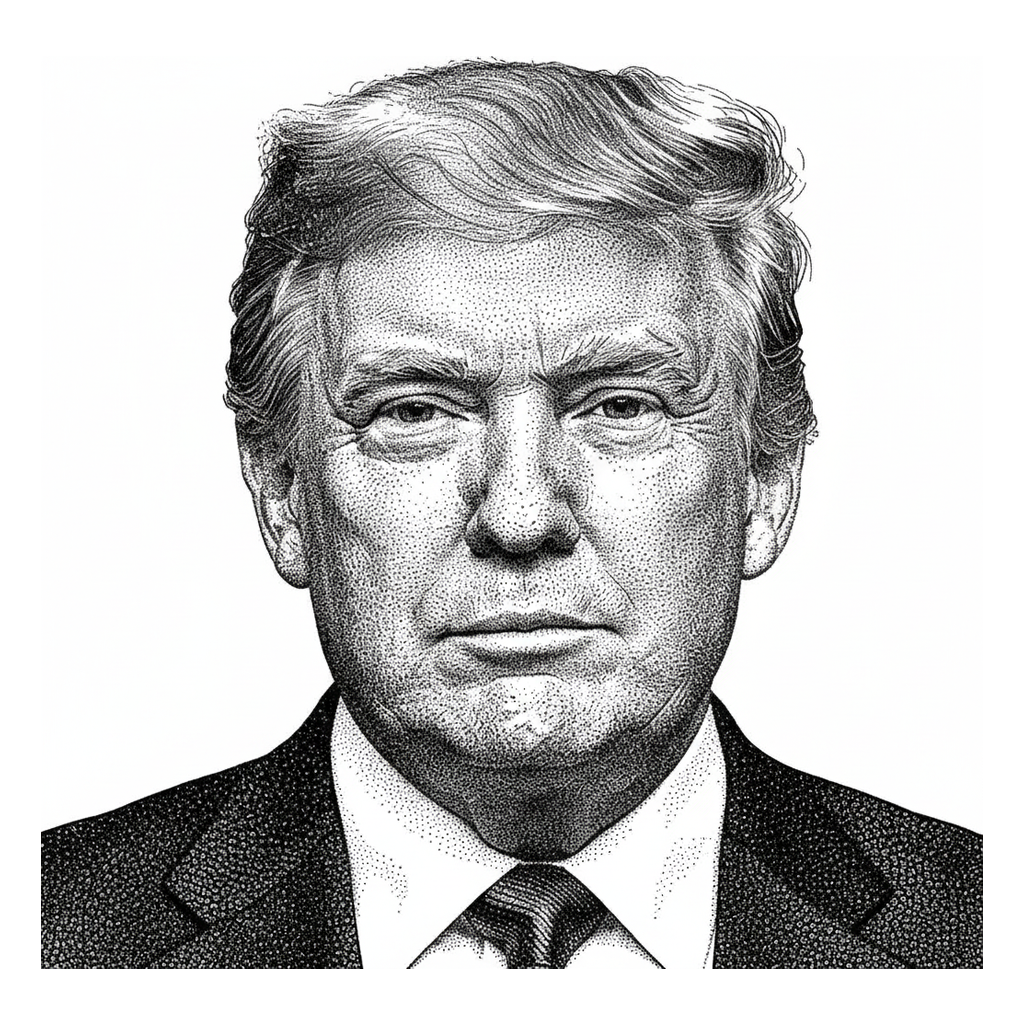
Critical distinction: The roughly US$14 billion PAC-3/NASAMS package is cleared by US officials but has not been formally notified to Congress. Until DSCA delivers the certifications, the package is leverage, not a sale. Treating it as either is wrong.
Window of repricing: weeks. The May 14 bilateral closes the diplomatic window. The DSCA notification window opens shortly thereafter, with a realistic announcement band of zero to ninety days. Position-taking on Lockheed (PAC-3 prime), RTX (NASAMS), and the loitering-munition supply chain has been moving in anticipation; the question is whether the binary clears in the time the market currently has priced.
What Happened
| Date | Event |
|---|---|
| Dec 17, 2025 | DSCA notifies Congress of eight Foreign Military Sales cases for Taiwan totaling US$11.1B: 82 HIMARS launchers and 420 ATACMS-class munitions ($4.05B); 60 M109A7 self-propelled howitzers ($4.03B); Altius loitering munitions ($1.1B); Tactical Mission Network Software ($1.01B); 1,050 Javelins ($375M); 1,545 TOW 2B missiles ($353M); AH-1W spare parts ($96M). |
| Dec 26, 2025 | Beijing announces countermeasures against 28 US defense companies. Ten subsidiaries (including Lockheed Martin, General Dynamics, and Raytheon units) are added to the "unreliable entity" list; assets in China are frozen and Chinese entities are barred from doing business with them. |
| Feb 4, 2026 | Xi-Trump phone call. Per the official Chinese readout, Xi urges Trump to handle Taiwan arms sales "with prudence" and frames Taiwan as "the most important issue in China-US relations." On February 17, Trump tells reporters aboard Air Force One: "I'm talking to him about it. We had a good conversation, and we'll make a determination pretty soon." This is the first time since the Six Assurances policy that a sitting US president has publicly described consulting Beijing on Taiwan weapons sales. |
| Mar 13, 2026 | Reporting confirms a roughly US$14B Taiwan arms package, primarily PAC-3 MSE interceptors and NASAMS air-defense missiles, is cleared at the working level but withheld pending Trump's planned trip to Beijing. An additional roughly US$6B asymmetric-capabilities tranche is also pending. |
| Apr 7-12, 2026 | KMT Chair Cheng Li-wun visits China. She meets Xi at the Great Hall of the People on April 10. Cheng phrases the 1992 Consensus as "One China, oppose Taiwanese independence," a formulation Xi echoes in the meeting. First sitting KMT chair-Xi meeting since 2016. |
| May 8, 2026 | Taiwan's Legislative Yuan passes the KMT-TPP NT$780 billion ($24.8B) special defense budget 59-51. All DPP lawmakers abstain in protest. The bill funds US arms only (NT$300B for the December 17, 2025 package; NT$480B reserved for the not-yet-announced package). The indigenous drone, integrated air defense, and command-and-control components of Lai's original NT$1.25T proposal are cut. |
| May 11, 2026 | China's foreign ministry confirms Trump's state visit dates of May 13-15. The visit was originally planned for March 31-April 2 and was reported as delayed in connection with the Iran war. |
| May 13-15, 2026 | Trump state visit to Beijing. Bilateral with Xi on the morning of May 14. Summit agenda includes trade, rare-earth supply, AI competition, and Taiwan declaratory language. |
Key Actors




What's Being Overstated
Separating signal from noise:
- • "$14 billion arms deal": Until DSCA delivers the certifications to Congress, no FMS case exists. Multiple wire reports describe the package as cleared, but "cleared" by Pentagon and State means cleared for the President to direct DSCA to notify, not notified. The 30-day Congressional review clock does not start until notification. Treating the package as a sale rather than as leverage misreads where in the process it sits.
- • "KMT is disarming Taiwan": The DPP framing is real (Lai's NT$1.25T proposal lost the indigenous portion), but the bill that passed still authorizes US$24.8B in US arms procurement, the largest US arms-funding package Taiwan has ever passed. The substantive criticism is that the cut hits the asymmetric and indigenous-industrial portion specifically, which is the part Taiwanese defense planners and most outside analysts argue Taiwan most needs and US arms can least substitute for. The headline number tells the opposite story from the analytical truth.
- • "Taiwan as bargaining chip": Both the CFR and CSIS pre-summit notes flag this risk, and the language is everywhere in commentary. But "bargaining chip" implies fungibility with trade or rare-earth concessions, and there is no public evidence that the Trump administration has framed Taiwan that way. The verified posture is package timing being aligned with summit calendar, which is standard practice across administrations (the Heritage and Global Taiwan Institute timelines document this back through Clinton). Timing alignment is not concession.
- • "Beijing's military pressure de-escalation": Reporting that Beijing has selectively toned down PLA exercises around Taiwan in the run-up to the summit is correct relative to the post-Lai-inauguration baseline of major Joint Sword exercises. It is not de-escalation in the structural sense; PLA aircraft incursions across the median line remain elevated against the pre-2022 baseline. Pre-summit tempo modulation is best read as managed signaling rather than as a doctrinal shift.
- • "TSMC fabricates over 90% of the world's advanced semiconductors": The 90%+ figure applies specifically to leading-edge logic nodes (3nm and 5nm). For all advanced semiconductors more broadly, the share is materially lower. The geopolitical risk-premium argument does not require the broadest figure to hold; the leading-edge concentration is what makes TSMC load-bearing for AI and high-end consumer chips. The looser version of the claim is a vulnerability to fact-check pushback.
- • "Declaratory language is binding policy": Markets read summit readouts as signals, but US policy on Taiwan is anchored in the Taiwan Relations Act of 1979, which obligates the US to provide defensive arms and is statute, not Executive discretion. A softer summit readout shifts the political signal; it does not amend the TRA, the Six Assurances, or the existing FMS pipeline. Markets often conflate rhetoric with policy; rhetoric and binding commitment have different half-lives.
Why It Matters
The next 30-60 days bundle four distinct repricing events into one calendar window. First, US$31B of approved-or-pending Taiwan arms revenue moves from "anticipated" to "scheduled" or "stalled," with Lockheed Martin, RTX, and the loitering-munition supply chain the most exposed names; the exposure runs through revenue recognition over multi-year delivery schedules, not single-quarter results. Second, the declaratory-language read on Taiwan from the White House readout is among the variables that pre-summit notes (CFR, CSIS, Brookings) flag most consistently, and a meaningful softening would be a probability shift on TSMC's geopolitical premium and downstream advanced-chip names; the magnitude depends on what is already in the price, the cleanness of follow-on policy actions, and contractual resilience among major chip consumers. Third, China's response to whatever Trump announces shapes the PLA exercise tempo and the next round of US-defense-firm sanctions. Fourth, the May 8 budget vote has already moved Taiwan's own indigenous defense industrial base, which has follow-through consequences for the asymmetric drone, IADS, and C2 supply chain that is structurally separate from the US FMS pipeline.
The compounding feature is that all four events resolve through one calendar gate. For institutional portfolios that hold defense and semiconductor names on separate theses, the May 14 bilateral materially raises the cross-sector correlation over the post-summit window. Whether this resolves as a one-day correlated move or as a slower repricing depends on how clean the post-summit readout is; the analytic point is that the events stop being independent, not that they will move in lock-step.
Approved or near-approved Taiwan arms pipeline, 2025-2026
The Dec 2025 package is funded and contracting. The PAC-3/NASAMS and asymmetric tranches are cleared at the working level but await Trump sign-out and DSCA Congressional notification. Taiwan's May 8 budget authorizes the funding envelope for the first two packages, not the third.
Sector Impact
Defense industrial
Lockheed Martin's PAC-3 line is the largest single named beneficiary in the pending package; RTX (NASAMS) is the co-prime. The December 2025 package is already in delivery sequencing for HIMARS (Lockheed prime), M109A7 (BAE Systems), Javelin (Raytheon/Lockheed joint venture), TOW 2B (Raytheon), and the Altius loitering munition (Anduril). Second-order beneficiaries through the supply chain include radar and battle-management vendors. The pivot inside Taiwan's budget away from indigenous drone manufacturing reduces follow-through to Taiwanese drone primes and to non-US asymmetric suppliers; this is a real downside for the second-tier supplier ecosystem that had been positioned for the indigenous program.
Semiconductors
Taiwan's concentration in leading-edge foundry is the load-bearing exposure. TSMC is the dominant producer of 3nm and 5nm logic, and Taiwan more broadly accounts for the majority of the world's pure-play foundry market. A meaningful softening of US declaratory language on Taiwan in the summit readout would likely re-rate TSMC's geopolitical risk premium and ripple to downstream consumers (Nvidia, AMD, Apple, Qualcomm, Broadcom, MediaTek, and the AI-accelerator ecosystem that is functionally TSMC-routed), although the magnitude depends on the cleanness of the readout, what is already in the price, and concurrent earnings drivers; this is a probability shift, not a deterministic re-pricing. Short-term mitigants for downstream customers include inventory drawdowns, alternative-routing through non-TSMC mature nodes, accelerated Arizona-fab milestones, and temporary wafer reallocation; these blunt but do not eliminate the leading-edge concentration over the 30-day window.
Leading-edge foundry share, 2026
The concentration argument holds at the leading-edge node, not the broader foundry market. For institutional capital running concentration screens, the 3nm/5nm figure is the load-bearing one.
Shipping, insurance, and rare-earth supply
Taiwan Strait routes account for a meaningful share of east-west container traffic and are the primary route for TSMC outbound shipments. Any PLA exercise tempo step-up in the May 15-30 window would force shipping insurers to revisit war-risk premia on the Strait. Separately, rare-earths is on the summit agenda directly; China's leverage on heavy and medium rare-earth exports remains material for the defense supply chain itself (PAC-3 magnets, radar components), creating a small but real loop where the package Trump may announce post-summit depends on inputs Xi controls.
Operational Geography
The cross-Strait pressure geometry compresses into a small geography. The red zone marks the median-line operating area where PLA Air Force tempo and naval drills concentrate. Dark markers are the Taiwan fab cluster and Port of Kaohsiung, the choke point for outbound advanced-chip shipments. Slate markers are the leading US-Pacific Command nodes and the Arizona fab buildout. The dashed corridor represents the US arms-flow lane via Guam and Yokota that the pending packages traverse.
Median-line operating area Taiwan node (fab / port) US-Pacific node Beijing / regional US arms-flow corridor
Client Implications
PE/VC Firms
Exposure: Defense portfolio companies that supply PAC-3, NASAMS, HIMARS, or Javelin sub-systems benefit from a committed pipeline now backed by Taiwan's own funding line. Semiconductor holdings face a re-rate event on summit day, since portfolio-level concentration in advanced-chip exposure flows through TSMC fabrication.
Opportunity: Second-order air-defense and radar suppliers exposed to the December 2025 package are contracting now and offer earlier visibility than the still-pending $14B package. The exclusion of indigenous Taiwanese drone procurement from the budget shifts addressable market for US-origin loitering munitions higher.
Risk: Binary timing on the $14B package. Concentrated bets on PAC-3/NASAMS exposure assume Trump signs out on a normal cadence; the Alternative scenario (60+ day delay) would compress IRRs for any position taken in anticipation. Indigenous-program-dependent Taiwanese targets are now structurally underfunded relative to last quarter's underwriting.
Family Offices
Exposure: The TSMC concentration premium is the dominant exposure for any portfolio with a meaningful AI, advanced-compute, or high-end-consumer-electronics allocation. Defense names that have already rallied on Taiwan demand visibility are priced for the package to be announced; downside on a delay is asymmetric.
Opportunity: The eight-year defense spending window (2026-2033) provides duration visibility for patient capital exposed to US defense primes. Diversification away from Taiwan-fab dependency through Korean and Japanese foundry exposure has gotten more expensive but remains structurally underweighted in most portfolios.
Risk: Concentration in air-defense names that are already priced for the Taiwan demand cycle. Concentration in TSMC and downstream advanced-chip consumers on a single jurisdiction. Trade out of risk-off positioning would be procyclical on the wrong summit outcome.
Corporates
Exposure: Any advanced-chip dependency (which is nearly every AI, automotive, and high-end consumer electronics OEM) sits on a single jurisdiction risk that the summit may reprice. Supply chain teams should pre-model a 30-day window where Strait shipping insurance gets re-quoted upward, even if no kinetic event occurs.
Opportunity: PAC-3 prime supply chain (Lockheed) and NASAMS prime supply chain (Raytheon) should expect accelerated delivery requests once notification opens. Counterparty discussions on the Arizona fab buildout cadence have new salience for any board with Taiwan exposure on the balance sheet.
Risk: Dual US-China market positions in defense-adjacent technology face escalation in Beijing's countermeasures list after any $14B package announcement. Companies on or one-degree adjacent to the unreliable-entity list should pre-model expanded scope as a baseline rather than as a tail.
Law Firms
Exposure: Export-control and ITAR practices are the load-bearing exposure. The PAC-3/NASAMS package, when notified, will trigger a fresh round of compliance work for prime contractors and lower-tier suppliers. Clients with any unreliable-entity-adjacent China exposure need expanded counterparty mapping now, not after Beijing publishes the next list.
Opportunity: Practice growth in export controls, secondary sanctions, and CFIUS-adjacent semiconductor investment review. The cancellation of indigenous Taiwanese defense programs creates contract dispute work around vendors who had positioned for that pipeline; the dollar volume is modest but the work is real.
Risk: Cross-jurisdiction conflicts where the same client is simultaneously a US defense supplier and holds Chinese market interests. Beijing's countermeasures list has expanded with each major Taiwan arms sale; clients on or near it should be advised assuming a forward scope rather than a current one.
Due Diligence Questions
Questions to incorporate into active due diligence processes:
Portfolio Exposure
- → What is the target's revenue exposure to Taiwan defense procurement, and does it distinguish between funded US arms sales and the unfunded indigenous capability programs that were cut from the May 8 budget?
- → What percentage of the target's semiconductor supply chain depends on TSMC fabrication at leading-edge nodes, and has management scenario-planned for a material change in US declaratory language on Taiwan?
Regulatory & Compliance
- → Has the target assessed secondary sanctions risk from Beijing's countermeasures against US defense firms? Specifically, is any subsidiary or first-degree counterparty on the December 2025 unreliable-entity list?
- → Does the portfolio company have contractual commitments tied to the $14B package that are contingent on Congressional notification, and what is the exposure if announcement timing slips beyond 60 days post-summit?
Competitive Dynamics
- → Where does the target sit relative to the loitering-munition, IADS, and C2 supply chains that the KMT budget cut left underfunded? Is there a credible US-substitution path or is the line of business contingent on the indigenous program returning?
- → If the target competes for Taiwanese government contracts, how is it positioned relative to the May 8 budget structure that prioritizes US FMS over indigenous procurement?
Operational Risk
- → Has the target modeled the impact of resumed PLA exercises around Taiwan on shipping insurance, supply chain transit times, and customer delivery commitments through the Strait?
- → What is the target's contingency for a TSMC fabrication disruption scenario (any cause), and how does the Arizona buildout cadence change that contingency over the next 12-24 months?
Red Label Assessment
Based on 14 primary sources across 5 jurisdictions (US, Taiwan, China, UK, Japan), including DSCA notifications, Taiwan Legislative Yuan records, the State Department, the Chinese Ministry of Foreign Affairs, and CSIS, CFR, Brookings, FDD, Atlantic Council, and the Asia Society analytic notes. Confidence and scenario weights are in Forecast Watch above.
The arms-package-timing frame, where most pre-summit coverage sits, captures the short-window trading position. The structural read is broader. The roughly $14B PAC-3/NASAMS package decision is the most-watched short-window variable, with multiple decision-makers, and we score the scenarios accordingly: Primary approximately 50%, Alternative approximately 30%, Tail A approximately 15%, Tail B approximately 5%. These are analyst judgments anchored to prior US-China summit-cycle outcomes (notification typically occurs within 30-60 days of major bilaterals), not Bayesian posteriors and not back-tested; ±10 percentage points should be treated as inside the noise band. The more durable signal of the past five weeks runs through the Legislative Yuan vote of May 8 and KMT Chair Cheng's April 10 meeting with Xi. We hold two readings as live and partially overlapping. First: these events are consistent with the konzeptzia-aligned path described above. Second: KMT-TPP behavior is over-determined by domestic incentives: fiscal positioning against a DPP government, coalition bargaining with the TPP, anti-Lai electoral calculus, and a long-running KMT skepticism of indigenous defense programs that pre-dates Cheng's chairmanship. The two readings are not mutually exclusive, and the analytic question is which dominates the trajectory through the November 2026 local elections. Both should be priced.
This fits Beijing's konzeptzia of patient political warfare below the kinetic threshold: integrating United Front Work Department cultivation of Taiwanese opposition leadership, selective trade pressure, narrative campaigns, and tempo modulation of military pressure around US calendar events. The point is to move the Taiwanese political center toward an accommodation framework without ever forcing the US into a binary kinetic response (see The Shape of Outcomes on the konzeptzia framework). To operationalize the read in falsifiable terms: if the KMT consolidates indigenous-defense skepticism into its 2026 local-election platform, that increases confidence in the konzeptzia frame; if the KMT instead positions for higher indigenous spending in subsequent budget cycles to recover DPP-leaning voters concerned about defense, that read weakens. The structural question is decided by Taiwan's voters, not by Trump in Beijing.
For institutional capital, the May 14 summit announcement reprices the short-window trading position but does not by itself reprice the structural exposure. The structural exposure runs through Taiwan's November 2026 local elections and the 2028 presidential race; the indicators worth tracking (KMT primary dynamics, business-elite public alignment, Beijing's pacing of trade and tourism levers) are not yet visible enough to score with the precision the structural read deserves. We deliberately do not predict that election shape. The recommendation is to model the next 30 days as a binary on the package, the next 6-18 months as a probability-weighted exposure to the Vektora-implied scenario distribution (UFWD success ~32%, partial control ~28%, democratic resistance ~22%, strategic pause ~12%, kinetic ~6%), and to allow for material US Congressional friction in either direction (notification holds, committee-level objections, or expedited approvals) that the Executive-branch focus of the package-timing debate tends to under-weight.
Where We Diverge From Consensus
Pre-summit consensus treats the package-timing question as the dominant variable for Taiwan exposure over the next 30 days. Our read is that the package-timing window is real but partial. The dominant variable is the political-warfare path indicated by the May 8 budget vote and the Cheng-Xi meeting, which we hold as a leading indicator that admits more than one interpretation, and which resolves on Taiwan's electoral cycle rather than on summit day. Position-takers who solve only for the announcement window risk being correct on the trade and undersized on the thesis.
Appendix: Deep Background
The Six Assurances and what changed in February
The Six Assurances, articulated by the Reagan administration in 1982, include the commitment that the United States would not consult with Beijing on Taiwan arms sales. Trump's February 17 remark on Air Force One that he was "talking to" Xi about Taiwan arms sales is, on a strict reading, the first time a sitting US president has publicly described doing so. Whether this represents a doctrinal break or a one-off rhetorical move is unresolved. The Taipei response, summarized in Lai's "rock-solid" formulation, is the diplomatic minimum required of any DPP government; it does not constitute a reading of how the administration intends to operationalize Six Assurances policy going forward.
Why the indigenous program cut matters more than the headline budget number
Taiwan's defense planning since 2017 has explicitly oriented around "asymmetric" capability: low-cost, high-distribution-density systems that can survive a first strike and impose disproportionate cost on a PLA amphibious operation. The asymmetric program canon includes indigenous loitering munitions, distributed coastal anti-ship platforms, distributed air-defense, hardened command-and-control, and reserve-mobilization infrastructure. US FMS packages, by contrast, deliver high-value, high-signature systems (PAC-3 batteries, M109A7 howitzers) that are easier to target in an opening salvo and harder to disperse. The DPP and the bulk of the analytic community in Washington, Taipei, and Tokyo have consistently argued that asymmetric capability is the harder-to-replicate component of Taiwan's deterrence posture. The KMT-TPP budget cut hit exactly that component. The substantive defense-industrial story is therefore narrower than "Taiwan funded $24.8B in arms"; the operative phrase is "Taiwan funded $24.8B in arms while cutting the asymmetric component the US has urged Taipei to fund."
Beijing's response pattern after major Taiwan arms sales
The December 26, 2025 countermeasures against 28 US defense firms followed a now-established pattern. Each major DSCA notification cycle since 2022 has prompted a Chinese countermeasure list that targets US defense primes, their subsidiaries, and named executives. The lists have expanded in scope and severity, with the December 2025 round adding ten "unreliable entity" designations (the most consequential tier of MOFCOM countermeasures, freezing assets and barring Chinese counterparty contact). After the next major package, the realistic expectation is another expansion in scope, likely to include more named executives and potentially second-degree counterparties (suppliers and sub-contractors).
Vektora cross-Strait scenario weights (informational)
Comparative read against Vektora analysis run ebc768e3 on Beijing's most probable strategy for political control over Taiwan through 2031. The Monte Carlo (100,000 samples) puts the probability mass on non-kinetic paths: UFWD political penetration succeeding 32%, non-kinetic pressure achieving partial control 28%, democratic resistance blocking 22%, economic crisis forcing strategic pause 12%, kinetic escalation after non-kinetic failure 6%. The implied probability that Beijing achieves severity ≥0.7 (meaningful political control) by 2031 is 24.5%, with severity ≥0.9 (de facto full control) at 4.8%. The May 8 budget vote and the Cheng-Xi meeting are leading indicators consistent with the UFWD-success path. None of this changes our short-window scenario weights for the post-summit announcement (which are about the package, not the structural path), but it does inform why we hold the structural read as the more durable signal.
Sources
| Source | Data | Date |
|---|---|---|
| Focus Taiwan (CNA) | Passage of US$24.8B special defense budget; 59-51 vote; DPP abstention; NT$300B / NT$480B split | May 8, 2026 |
| Taiwan News | KMT-TPP joint sponsorship; opposition cut of drone, IADS, C2 from Lai's NT$1.25T proposal | May 8, 2026 |
| Bloomberg | Confirmation of $25B aggregate; political framing of budget cycle | May 8, 2026 |
| FDD | Analytic framing of Taiwan budget vis-à-vis Chinese coercion campaign | May 8, 2026 |
| Taipei Times | ~$14B PAC-3/NASAMS package details; awaiting Trump sign-off | Mar 14, 2026 |
| Modern Diplomacy | Package held pending Beijing trip; additional ~$6B asymmetric tranche flagged | Mar 13, 2026 |
| NPR | Pre-trip package delay framing | Mar 4, 2026 |
| Council on Foreign Relations | Pre-summit analysis; declaratory-language risk for Taipei | May 2026 |
| CSIS | Summit agenda framing; Taiwan position in package mix | May 2026 |
| Focus Taiwan (CNA) - Dec package | DSCA notification of eight FMS cases; itemized $11.1B breakdown | Dec 17, 2025 |
| PRC Ministry of Foreign Affairs | Countermeasures against 28 US defense firms; unreliable-entity list expansion | Dec 26, 2025 |
| Washington Times | Xi-Trump Feb 4 call readout; "prudence" formulation; "most important issue" | Feb 5, 2026 |
| Taipei Times | Cheng Li-wun meeting with Xi at the Great Hall of the People | Apr 11, 2026 |
| SCMP | Confirmation of Trump state-visit dates May 13-15 | May 11, 2026 |
Article History
- May 11, 2026 Published
- May 11, 2026 Counterpoint Pass 1 revisions: hedged "did more than language shift" causal claim with explicit alternative-read framing (domestic coalition politics); added scenario-weight methodology note (analyst judgment vs. Bayesian posterior); added US Congressional dynamics subsection to Forecast Watch (notification holds, committee process); softened market-coupling language from "collapses" to "raises cross-sector correlation"; added short-term semiconductor-customer mitigants (inventory, alt-routing, Arizona ramp); added TRA-vs-declaratory-language distinction to What's Being Overstated; added operationalized falsifiable indicators for the konzeptzia frame.
- May 11, 2026 Counterpoint Pass 2 revisions: removed "binary" framing from Executive Summary (replaced with "tight" / "multi-actor process"); strengthened the KMT-as-domestic-politics alternative read in Red Label Assessment (added explicit list of competing domestic drivers: fiscal positioning, coalition bargaining, anti-Lai calculus, structural KMT skepticism of indigenous programs); expanded Horizon calibration text to enumerate the interagency and Congressional-review steps that determine notification timing.
- May 11, 2026 Counterpoint Pass 3 revisions: removed "single most-watched" framing from Why It Matters; replaced "Holds binary" in Trump actor card with multi-actor formulation. Pass 3 also surfaced equity-research-level asks (company-by-company revenue/backlog/margin quantification for Lockheed/RTX/BAE/Anduril; named-senator Congressional probability tables; pre-summit options-implied volatility analysis; alternative-fab ramp timelines) that are out of scope for the alert format. These are properly addressed in follow-on briefings rather than in this piece; flagging here so a reader can see what we are not predicting and why.
Substantive updates after publication are logged here. Typo fixes and formatting changes are not. Raw revision history available in the redlabel-website git log.