
Risk Matrix
Executive Summary
The UAE walked out of OPEC in the middle of the Iran war, without consulting Saudi Arabia. Energy Minister Suhail Al Mazrouei announced the exit on April 28, effective May 1, ending a 59-year membership that began with Abu Dhabi joining in 1967. The cartel loses one of its top three producers (rank within OPEC depends on Iranian output, which has been variable since the strikes).
The UAE is no longer accepting OPEC quotas in exchange for collective pricing power. ADNOC moved its 5-million-barrel-per-day capacity target forward from 2030 to 2027 in 2022-23, and has announced approximately $55 billion in project commitments through 2028 (per Economic Times reporting; full scope subject to ADNOC disclosure). Free of OPEC discipline, the UAE can move toward expanding output by up to 1.6M bbl/day on a nameplate basis, though sustained exports will depend on field-level execution, decline-rate offsets, and export logistics through Fujairah and Jebel Dhanna.
Al Mazrouei said the war created "an opportune time" for the move. That admission, paired with the unilateral framing (Saudi Arabia not consulted), signals UAE positioning for a post-peak-oil-demand world where OPEC cohesion weakens and Gulf producers compete on capacity rather than coordinate on price. The parallel narrative around dirham-settled oil sales to India is real but operates within an AED-USD peg, which limits the macro-decoupling implication; the institutional shift matters more than the currency-settlement angle.
Forecast Watch
Calibration
Mechanism and horizon are scored separately. HIGH on mechanism with MEDIUM on horizon is a common, well-calibrated pattern. HIGH on both requires both an established dynamic and a tight, defensible clock.
Scenarios
Cartel cohesion erodes; UAE-Saudi divergence becomes the new normal
UAE moves toward higher capacity by 2027, subject to project execution, decline-rate offsets, and Hormuz/Fujairah throughput constraints. OPEC discipline weakens at the margin. Saudi Arabia uses Official Selling Price (OSP) differential warfare to defend Asian netbacks rather than full-scale volume war. Other small producers reassess membership. OPEC retains structure but with diminished pricing function. Price level depends materially on non-OPEC supply (Brazil, Guyana, Canada TMX, Norway) and demand-side trajectory; we do not project specific bands.
OPEC adapts; Saudi-led re-coordination absorbs the shock
Saudi Arabia accepts the UAE departure as a contained event. Remaining members tighten coordination; Saudi absorbs additional cuts to defend pricing. UAE output growth occurs but is partly offset by tighter Saudi discipline and possible bilateral side arrangements. The Saudi-UAE relationship recovers to functional, if cooler. UAE may pursue associate or observer arrangements rather than full re-entry.
Cascade exit or Saudi confrontational response
Other producers (Algeria, Gabon, Republic of Congo) follow within 18 months. Or Saudi Arabia chooses 2014-style volume confrontation, leveraging higher fiscal break-evens against UAE's lower break-even cost structure (UAE break-even ~$25; Saudi fiscal break-even ~$80+). Such a response is more likely to be Saudi-painful than UAE-painful, which is itself a deterrent.
If Primary and Alternative are within 60/40, treat as co-equal scenarios in the narrative, not Primary plus footnote.
Watch For (Falsifiable Indicators)
- → ADNOC monthly production data. Track movement above 4.0M bbl/day toward the 5M target. Faster ramp validates the primary scenario.
- → Saudi production decisions at the next OPEC meeting. Voluntary cuts signal accommodation (alternative scenario). A production-share announcement signals confrontation (tail scenario).
- → Other OPEC member signals. Angola left in 2023; Ecuador exited twice. Watch for Algeria, Gabon, or Republic of Congo to telegraph reassessment. A second exit within 18 months would confirm cascade dynamics.
- → Dirham-settled crude volumes to India. Indian refiners' AED-denominated UAE crude purchases scaling past pilot levels would corroborate the de-dollarization thesis as more than incidental.
- → ADNOC capex velocity. The $55B project pipeline pace is the operational signal. Acceleration confirms commitment; delays suggest internal friction.
- → Saudi-UAE diplomatic optics. A UAE-Saudi summit, joint ADNOC/Aramco statement, or visible MBS-MBZ engagement would signal accommodation. Continued silence or proxy disputes (Yemen, Sudan, Libya) signal entrenched divergence.
Actor Posture
The UAE is acting from a position of strategic strength, not survival. Standard rational-actor analysis applies: this is calculated capacity-pricing arbitrage by a confident producer that has reached the conclusion peak oil demand makes OPEC quotas a worse trade than independent ramp-up. Saudi Arabia's posture is the harder read: institutional but with personalist concentration under MBS, where face-saving may compete with cost-minimizing strategy.
Tactical Decay
Production figures, capex commitments, and price points are accurate as of May 2026. Expected to require revision after: the next OPEC meeting, an ADNOC capex announcement, a Saudi production-decision shift, or any second-mover OPEC exit signal. Structural analysis (cartel cohesion, peak oil demand thesis, dirham-settlement infrastructure) has a multi-year half-life.
The Signal
OPEC was founded in 1960. Abu Dhabi joined in 1967. The UAE became a member when the federation was formed in 1971 and stayed for 55 more years. On April 28, 2026, three weeks after the Iran ceasefire and four days before the May 1 effective date, Energy Minister Suhail Al Mazrouei told CNBC the membership was over. He had not, he said, consulted Saudi Arabia.
The reasons given were structural: ADNOC's accelerated 5-million-barrel-per-day capacity target, the $55 billion investment plan announced in early 2026, and the assessment that quota discipline was costing the UAE more than the collective pricing power was worth. The reason left implicit was timing. The Iran war, the partial Hormuz closure, and the dispersal of OPEC's attention created a window in which the exit could be announced with "minimum impact" on remaining members. That phrase, also from Al Mazrouei's CNBC interview, is the operational read: the UAE believed the cartel could absorb the shock without a coordinated retaliatory response, and chose this moment because the analysis was true.
What this is, and what it isn't.
This is a structural realignment of Gulf energy policy and a measurable weakening of OPEC's pricing function. It is not the end of OPEC as an institution; OPEC retains 33 percent of global oil production and includes Saudi Arabia, Iraq, Kuwait, Iran, Nigeria, Venezuela, and others. The cartel will continue to exist. What it loses is the third-largest producer's discipline, the symbolism of unanimity, and any pretense that Gulf monarchies still coordinate on energy as a single bloc.
What Happened
| Date | Event |
|---|---|
| 1960 | OPEC founded in Baghdad by Iran, Iraq, Kuwait, Saudi Arabia, and Venezuela. |
| 1967 | Abu Dhabi joins OPEC, ahead of the UAE's 1971 federation. |
| 2014-15 | Saudi-led OPEC price war over US shale market share. UAE complies under pressure. |
| 2021 | UAE objects to Saudi-led OPEC+ output deal, demanding a higher production baseline. Compromise reached but Saudi-UAE rift visible publicly for the first time. |
| 2023 | Angola exits OPEC over quota dispute, a precursor signal. |
| 2022-23 | ADNOC publicly advances 5M bbl/day capacity target from 2030 to 2027. Multi-year capex plan publicly committed and reaffirmed in subsequent disclosures. |
| Feb-Apr 2026 | Iran war disrupts OPEC governance attention. Hormuz partial closure constrains UAE exports. Iran missile and drone activity reaches UAE territory. |
| Apr 17, 2026 | Strait of Hormuz reopens to commercial shipping after the April 7 ceasefire. |
| Apr 28, 2026 | UAE Energy Minister Suhail Al Mazrouei announces the OPEC and OPEC+ exit on CNBC, effective May 1. Says Saudi Arabia was not consulted. |
| May 1, 2026 | UAE departure effective. OPEC continues with 11 remaining members. Brent crude near $111 on Hormuz aftermath; UAE exit reaction muted but measurable. |
Key Actors





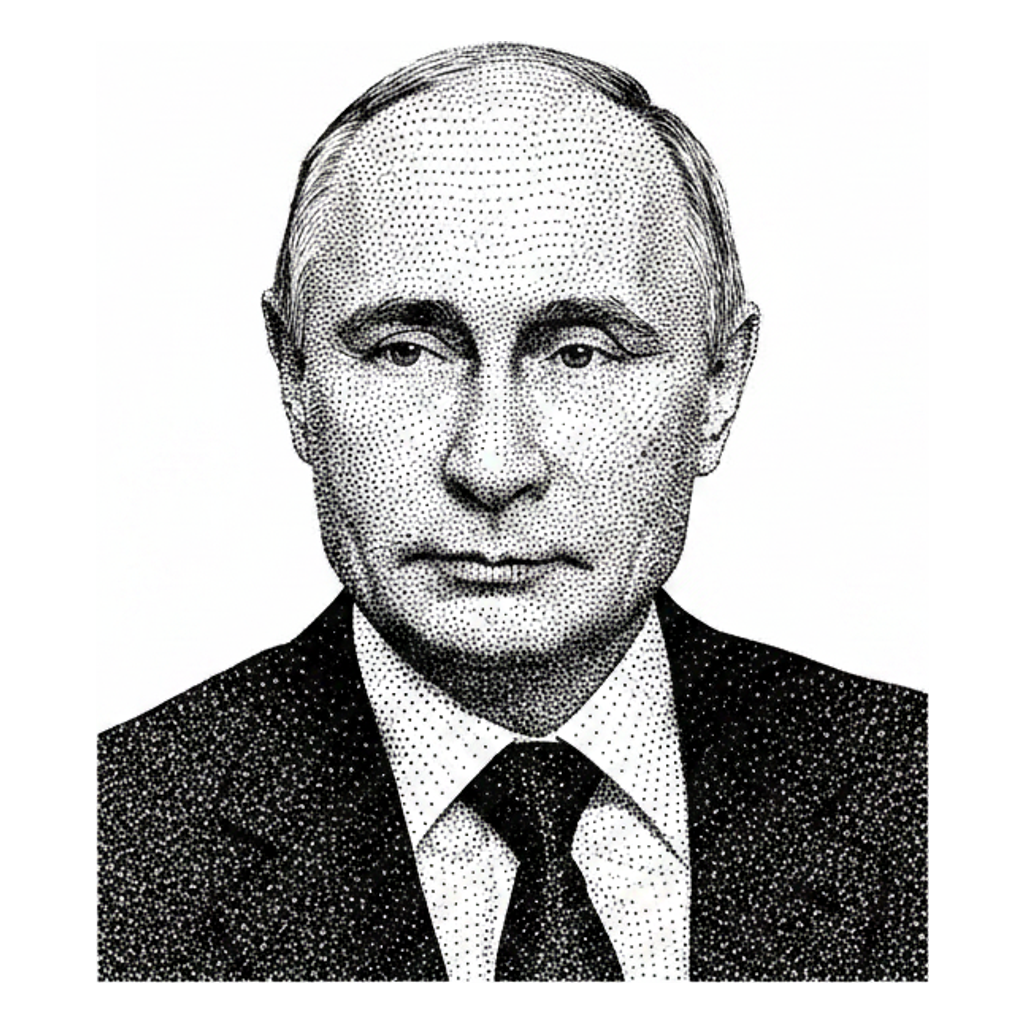
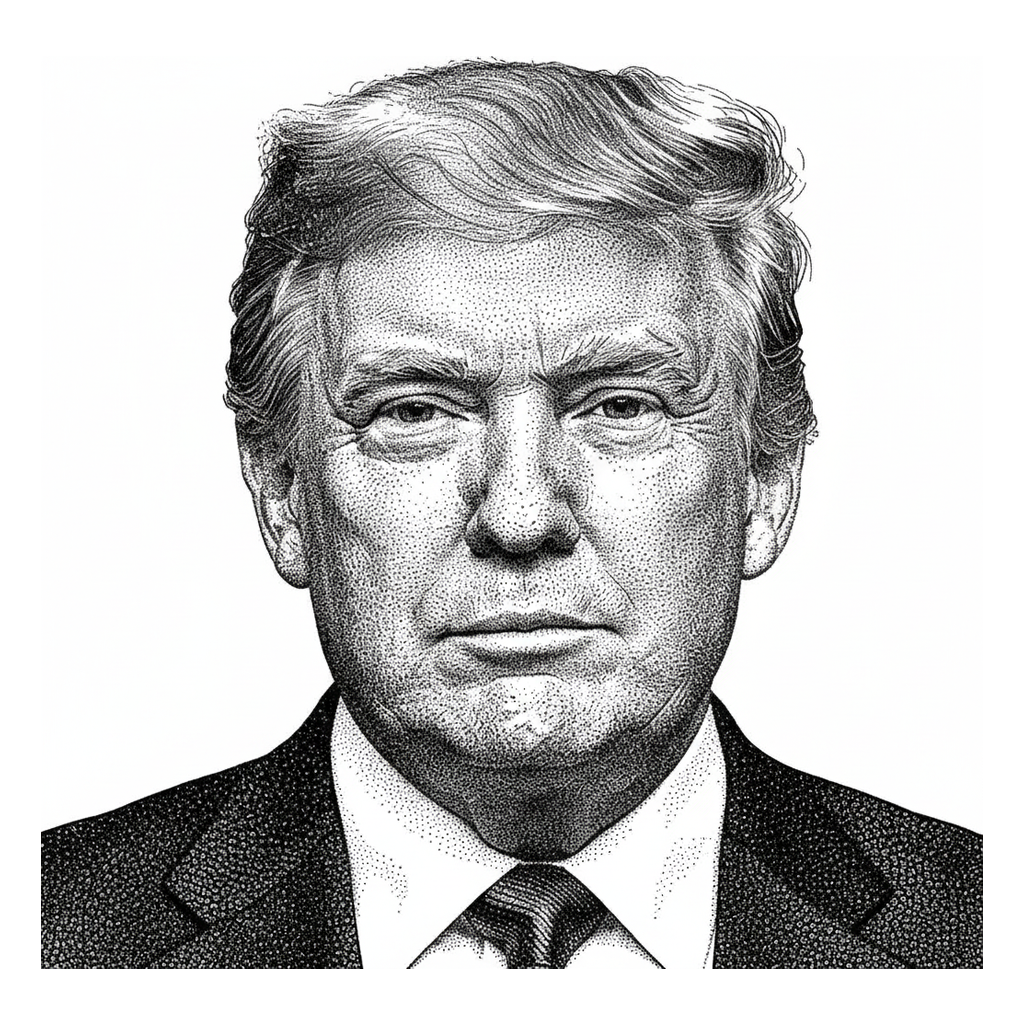

What's Being Overstated
Several framings have circulated since the announcement that should not be taken at face value:
- • "OPEC is finished." Overstated. OPEC retains 11 members and roughly 30 percent of global oil production. The cartel still includes Saudi Arabia (the marginal producer that determines pricing), Iraq, Iran, Kuwait, and Nigeria. What the UAE exit removes is unanimity and one source of supply discipline; what it does not remove is the institution.
- • "Saudi Arabia was completely blindsided." Possibly overstated. Al Mazrouei said he did not consult Saudi Arabia on the timing or decision. That does not mean Riyadh was unaware UAE departure was a long-running possibility. The 2021 quota dispute publicly aired the structural divergence. Read the consultation gap as the symbolic snub it is, not as an information surprise.
- • "This is primarily a de-dollarization move." Misframed. The UAE has been settling some crude trades in dirhams (notably Indian refiner purchases) for years; that infrastructure exists independent of the OPEC exit. The exit is primarily a capacity-arbitrage decision (escape quotas) and a peak-oil-demand strategic positioning. The dollar-settlement angle is real but secondary, and the article should not promote it to primary cause.
- • "The UAE will immediately flood the market." Premature. ADNOC's 5M bbl/day target is 2027, not 2026. Investment plans are public; ramp execution is multi-year. The market impact is structural, not immediate. Expect gradual pressure on OPEC discipline through 2026-27, not a price collapse this quarter.
- • "The Iran war caused this." Wrong direction. The structural decision predates the war. The war provided cover and timing ("opportune moment" per Al Mazrouei) but the strategic calculus, capacity targets, and Saudi-UAE divergence were all pre-existing. Treating the war as cause overstates contingency and understates the multi-year planning behind the exit.
Why It Matters
The UAE exit matters on three structural levels, in increasing time horizon: the immediate cartel governance impact, the medium-term Gulf alliance restructuring, and the long-term peak-oil-demand strategic positioning.
Cartel governance. OPEC's pricing function depends on quota discipline among members and Saudi willingness to absorb residual cuts. The UAE exit removes ~3.4M bbl/day from the disciplined-supply pool. The 1.6M bbl/day of incremental capacity the UAE plans to bring online by 2027 will arrive without a quota framework, which means Saudi Arabia carries either the entire price-defense burden or accepts lower prices. Both options are uncomfortable. The credible signal: even with full Saudi cooperation, OPEC's effective supply discipline is materially weaker than it was on April 27.
Gulf alliance restructuring. The Saudi-UAE rift has been visible since 2021 (the public quota dispute). Through that period, the two governments still coordinated on Yemen, Sudan, Libya, regional security architecture, and Iran posture. The OPEC exit, made without consultation, is the first event in which the UAE has formally chosen institutional divergence over coordination. Whether parallel divergences surface in non-energy domains (Iran policy, Sudan posture, US/China/India bilateral relationships) is the open empirical question; we are not predicting them, only noting that the constraint against them has weakened. The Gulf no longer acts as a single bloc on energy. Whether that pattern propagates is an indicator to watch, not a forecast.
Peak oil demand positioning. Multiple producer-country and analyst sources now treat peak global oil demand as plausibly within the 2030-2035 window. For a low-cost producer with very large reserves like the UAE, the strategic conclusion is that maximum production over the next decade beats price discipline. OPEC quotas constrained that strategy. The exit removes the constraint. If the peak-demand thesis is right, the UAE has now claimed the high-output, market-share-maximizing position five years ahead of when Saudi Arabia or Iraq could credibly do the same.
Sector Impact
Margin pressure for higher-cost producers, contingent on demand and non-OPEC supply.
UAE capacity ramp adds to non-OPEC supply growth (Brazil, Guyana, Norway, Canada), creating downward pressure on the long-term price band. US shale at marginal-cost break-evens around $55/bbl WTI is most exposed to a sustained price decline; integrated majors face slower deepwater payback timelines. ADNOC, Aramco (with caveats around fiscal break-even), and other low-cost producers are best positioned. Stress-test upstream theses against scenarios with prices materially below the recent post-Hormuz range.
UAE-specific tailwind; broader sector exposure is price-sensitive.
ADNOC's announced project commitments (~$55B through 2028) are a multi-year demand pull for OFS, drilling, subsea, and engineering services in UAE specifically. Schlumberger, Halliburton, Baker Hughes, and Saipem participate. UAE-specific contractors (NPCC, Abu Dhabi-based EPCs) see disproportionate uplift. The broader OFS thesis is more price-sensitive: if Saudi response or non-OPEC growth compresses prices below US-shale break-evens, North American activity slows and global OFS demand softens despite UAE growth. Position sizing should differentiate UAE-direct exposure from broader cyclical OFS exposure.
UAE SWFs gain volume optionality; cash-flow stability depends on price.
UAE oil revenue uncoupled from OPEC quotas means Mubadala, ADIA, and ADQ have higher volume optionality on capex deployment. Cash-flow reliability is a function of price as well as volume; if Saudi response compresses prices, increased volume may not translate into higher SWF revenue. PIF's diversification urgency rises if Saudi production share is contested. Expect more aggressive UAE outbound M&A; PIF response may emphasize non-oil sectors (sport, AI, gaming, tourism) to preserve narrative momentum.
Dirham-settled crude infrastructure expands within a USD-pegged orbit.
Indian refiner purchases of UAE crude in AED are documented pilot transactions. Independent UAE energy policy raises the operational ceiling on AED-denominated trade settlement. The AED is pegged to USD at 3.6725, so this is payment-rail re-routing rather than economic decoupling from the dollar. Implications are second-order for global dollar dominance but real for trade-finance banks (Emirates NBD, ADCB) and the AED-denominated commodity-hedging market. Indian regulatory and banking preferences will continue to gate scale.
Crude differentials widen; complex refiners benefit.
More UAE crude on the market without quota discipline reduces medium-sour scarcity. Light-heavy and sweet-sour differentials likely widen. Indian (Reliance, IOCL), Chinese (Sinopec, CNPC) and US Gulf Coast complex refiners with flexible feedstock slates are best positioned. Single-feedstock refineries face margin compression.
Mixed read. UAE doubles down on oil capacity but also on green hydrogen.
The UAE exit signals the conclusion that peak demand is approaching, which would normally accelerate transition investment. ADNOC's parallel investments in CCUS, hydrogen, and Masdar suggest a hedged strategy rather than oil-only doubling-down. Renewables narrative fundamentals unchanged; UAE remains a paradoxical hybrid (max oil + max green).
Client Implications
PE/VC Firms
Exposure: Portfolio companies in upstream oil (especially US shale and high-cost offshore) face medium-term price-band compression risk. Companies with concentrated Saudi exposure may see margin pressure if Riyadh defends prices through cuts.
Opportunity: ADNOC's $55B capex pipeline is a structural tailwind for OFS, midstream, and EPC names. UAE-adjacent infrastructure (ports, pipelines, LNG, petrochemicals) also benefits. Long-cycle Gulf-exposed industrials.
Risk: Theses priced on $80+ Brent need stress-testing against a $60-70 base case. Saudi-UAE rift could escalate into 2014-style price war if MBS chooses confrontation; tail-risk to all upstream positions.
Family Offices
Exposure: Energy allocations sized for OPEC discipline maintaining $80-100 Brent need re-examination. Currency exposure: AED-denominated assets (UAE real estate, listed equities) may benefit from sustained capex inflows.
Opportunity: Direct UAE infrastructure co-investments alongside Mubadala, ADQ, and ADIA. Indian refiner-related debt and equity benefits from secured low-cost AED-settled crude. Saudi PIF-adjacent diversification plays may re-rate as PIF accelerates non-oil mandate.
Risk: Concentration in Gulf monarchy thesis assumes Saudi-UAE coordination. That assumption is now weaker; political risk scenarios should split out the two.
Corporates
Exposure: Multi-year energy procurement contracts at $80+ may now overprice. Suppliers to Saudi Aramco face slower capex tempo if Riyadh defends prices through quota cuts.
Opportunity: UAE inbound investment surge. ADNOC, Mubadala, and ADQ are deploying significantly more capital with fewer OPEC-coordination constraints. Cross-border M&A advisory and strategic JV demand rises.
Risk: Logistics risk: a decoupled UAE may pursue separate Iran, Yemen, and Sudan policies that diverge from US-Saudi alignment. Compliance and reputational risk for firms with both Saudi and UAE exposure increases.
Law Firms
Exposure: Energy practice clients with OPEC quota-related contractual provisions. Sanctions-adjacent advisory (US dollar-settlement vs AED-settlement) becomes more complex.
Opportunity: Energy capital markets, project finance, and Gulf M&A all see increased deal flow. AED-denominated trade-finance and commodity-hedging documentation is a growing niche.
Risk: Antitrust scrutiny of Gulf coordination disputes (would Saudi retaliation against UAE producers trigger competition concerns in Western markets?). Contractual force-majeure language tested by Hormuz precedent.
Due Diligence Questions
Questions to incorporate into active due diligence for energy-exposed, Gulf-adjacent, or oil-priced positions:
Portfolio Exposure
- → What price deck are upstream investments using? Stress-test against $60 Brent base case and $50 downside.
- → Does the portfolio assume Saudi-UAE coordination, or treat them as independent variables? If coordinated, the model is now stale.
- → What's the exposure to Saudi-led OPEC discipline holding through 2027? Position size accordingly.
Regulatory & Compliance
- → For dirham-settled crude trades: what's the OFAC and FinCEN exposure? Does the firm have AED-denominated trade-finance counterparty diligence current?
- → Are existing Gulf supplier contracts force-majeure-tested for an Iran-war-equivalent disruption? Hormuz precedent matters.
- → If the UAE pursues independent Iran policy diverging from US sanctions, do existing contractual arrangements remain compliant?
Competitive Dynamics
- → Are competitors repricing Gulf-related thesis assumptions? OFS, integrated oil majors, and trading houses are early movers; track their commentary.
- → Does the firm have ADNOC-bid capability? UAE capex bid lists are now larger and more lucrative; vendor pre-qualification matters.
- → Has the firm modeled a 2014-style Saudi price war as a tail scenario? Even at 20 percent probability, the magnitude justifies preparation.
Operational Risk
- → For Gulf operations: is the contingency plan calibrated for a UAE that pursues separate regional positions from Saudi Arabia? Yemen, Sudan, Libya postures may diverge.
- → Does the corporate counterparty matrix account for separate UAE and Saudi sovereign risk? They were correlated; the correlation just weakened.
- → Are talent and personnel policies for staff in UAE and Saudi calibrated for divergent regional postures, including potentially distinct Iran-related exposure?
Red Label Assessment
Based on the UAE Energy Minister's CNBC interview, ADNOC capacity disclosures, OPEC institutional data, and analyst commentary across Foreign Policy, Bloomberg, Al Jazeera, and Ember. Confidence and scenario weights are in Forecast Watch above.
The UAE exit reads as the first move in a multi-year unwinding of OPEC's effective pricing function. Three pieces fit together: the structural divergence visible since the 2021 quota dispute, the ADNOC capacity acceleration that requires escape from quotas to execute, and the peak-oil-demand thesis that makes the trade rational. The Iran war did not cause the decision; it provided cover. The consultation snub of Saudi Arabia is the diagnostic detail, not the substantive one.
For the primary scenario to be wrong, two things would need to hold: Saudi-led OPEC would need to find new internal levers to enforce price discipline despite losing the UAE, and the UAE itself would need to underperform its own 5M bbl/day target through 2027. Both are possible. Saudi Arabia has carried OPEC discipline through previous defections (Indonesia, Ecuador, Angola); the question is scale. The UAE target requires sustained capex execution; ADNOC's track record is good but not guaranteed.
We are deliberately not predicting Brent's price level beyond 12-18 months out. Energy markets price geopolitical and structural shocks asymmetrically; both the UAE ramp and any Saudi response will play out against unrelated demand-side surprises (China industrial activity, EV uptake, OECD recession risk) that are not knowable. The Watch For indicators above are the right falsifiable signals; price levels are downstream of those.
Where We Diverge From Consensus
Most coverage treats the exit as either a cartel obituary ("OPEC is finished") or a tactical UAE move ("free to ramp"). We read it as a coherent multi-year strategy: peak-oil-demand-aware capacity arbitrage by a confident producer, made possible by a weakening Saudi-UAE alliance and timed for an Iran-war moment when cartel attention was elsewhere. The structural read is what matters; the institutional headline is downstream of it.
Appendix: Deep Background
OPEC's Pricing Function
OPEC, founded in 1960 in Baghdad, is a cartel in the technical sense: a coordinated group of producers that uses production quotas to influence global oil prices. The mechanism is simple. Each member is assigned a production ceiling. By collectively producing less than market-clearing supply, the group raises price. Members benefit from the higher revenue per barrel even as they sell less volume. The discipline is voluntary and historically fragile.
Saudi Arabia has played the role of swing producer, willing to absorb additional cuts when others cheat or when demand collapses. That role is what made the cartel functional. It is also what made it expensive for Saudi Arabia: in exchange for cartel pricing power, Riyadh accepts smaller market share than its capacity would otherwise allow. The UAE exit removes one of the more disciplined quota-followers, increases the residual that Saudi Arabia must absorb, and weakens the institution.
Prior Exits: Angola, Ecuador, Indonesia
The UAE is not the first major exit. Indonesia left in 2008 (and again in 2016 after a brief return). Ecuador left twice, most recently in 2020. Angola exited in 2023 after a quota dispute that closely paralleled the 2021 UAE objection. None of those exits collapsed OPEC; each weakened it incrementally. The cumulative pattern is a slow institutional drift toward an OPEC defined by a Saudi-Iran-Iraq core, with smaller producers reassessing membership when domestic capacity ambitions exceed quota allocations.
What distinguishes the UAE exit from prior cases: scale. Indonesia and Ecuador were small producers. Angola was mid-sized and mostly exhausted. The UAE produces approximately 3.4M bbl/day and is targeting 5M; it is the third-largest producer and the largest exit in OPEC's history.
The 2021 Quota Dispute
The visible Saudi-UAE rift dates to July 2021. OPEC+ agreed to a phased increase in production. The UAE objected, demanding a higher production baseline that reflected its expanded capacity. The dispute was public, sharp, and atypical for an organization that usually negotiates in private. The compromise that resolved it (a higher UAE baseline) preserved the deal but signaled that the UAE had outgrown the quota framework. Subsequent OPEC+ meetings managed continued tensions; the April 2026 exit is the resolution that was always implicit in the 2021 dispute, just delayed by five years and a war.
The Peak Oil Demand Thesis
Multiple credible analytical bodies (IEA, BloombergNEF, Ember, Wood Mackenzie) now project peak global oil demand within a 2030-2035 window, with significant variance based on EV adoption rates, China industrial trajectory, and OECD policy. For a low-cost, large-reserve producer, the implication is clear: production maximization over the next decade beats price discipline. If demand peaks in 2032 and declines thereafter, the UAE earns more by selling 5M bbl/day at $65 over the next decade than 3.4M bbl/day at $80. The math depends on cost structure (UAE breakeven is ~$25/bbl) and reserve life (UAE reserves support 5M bbl/day for decades). Both favor the exit.
Dirham-Settled Crude
The UAE has been gradually building infrastructure for non-dollar oil settlement. Indian state refiner Indian Oil Corporation purchased a cargo of UAE crude in dirhams in 2023, the first non-dollar UAE crude trade with India. Subsequent transactions followed. The infrastructure (AED-denominated trade finance, settlement banking via Emirates NBD and ADCB, hedging via DGCX) was already operational before the OPEC exit. What changes with the exit is the institutional commitment: independent UAE energy policy means the AED-settlement option can scale without OPEC-coordination friction. This is one of several second-order channels through which the exit matters beyond pricing.
Iran War Context
Operation Epic Fury (February 28, 2026) and the subsequent Hormuz partial closure created a window in which OPEC governance was distracted and the UAE was directly affected. Iran missile and drone activity reached UAE territory during the war. The Hormuz closure constrained Emirati exports for several weeks. Both events made OPEC membership less valuable to the UAE: the cartel offered no protection against Iranian retaliation and no relief from Hormuz disruption. Al Mazrouei's "opportune time" framing in the CNBC interview is best read as: the war made the costs of staying clearer and the political space for leaving wider.
Capacity vs. Sustained Exports
Nameplate production capacity is not the same as sustainable exportable volume. ADNOC's 5M bbl/day target depends on field-level execution across Upper Zakum, Lower Zakum, Umm Shaif, and Murban-grade fields, with material decline-rate offsets via waterflood and EOR. Logistics constraints add friction: the Fujairah bypass pipeline (1.8M bbl/day capacity) provides Hormuz-independent export, but Jebel Dhanna and Ruwais terminals retain Hormuz dependency. Tanker availability and storage capacity also bind. The 1.6M bbl/day potential incremental export figure should be read as an upper bound on physical capacity, not a forecast of realized exports. Realized incremental exports through 2027 will likely be materially lower; the structural pricing pressure operates regardless, but on a smoother and slower curve than nameplate growth implies.
Saudi Response Toolkit (Beyond Volume Cuts)
A binary frame of Saudi response (cut to defend prices, or ramp for a 2014-style price war) understates the toolkit. Saudi can also use Official Selling Prices (OSPs) to wage differential warfare on a grade-by-grade and region-by-region basis, particularly into Asia where ADNOC's Murban competes with Saudi Arab Light. OSP discounts squeeze UAE netbacks without requiring a global price collapse. Saudi can also offer bilateral arrangements (joint ventures, refining offtake deals, security guarantees) that effectively pay the UAE to coordinate informally outside OPEC. Coexistence scenarios are more likely than either pure accommodation or pure confrontation; ignoring the OSP and bilateral channels overstates the binary nature of the cartel-pricing question.
Cost Structures and Pain Thresholds
Three different "break-even" concepts are often conflated and matter separately. Upstream lifting cost (cash cost to pull a barrel out of the ground) is roughly $3-5/bbl for both UAE and Saudi major fields, among the lowest globally. Marginal-cost break-even (including capex amortization and royalties) is in the $25-30/bbl range for UAE and $10-15/bbl for Saudi, reflecting differences in field maturity and tax/royalty structures. Fiscal break-even (oil price needed to balance the national budget given current spending) is approximately $50-65/bbl for UAE and approximately $80/bbl for Saudi Arabia (per IMF estimates), reflecting Vision 2030 spending and transformation-budget commitments.
The asymmetry that matters for response analysis is fiscal break-even, not lifting cost. A sustained sub-$60 Brent environment from a Saudi-led volume war would damage Saudi government finances more than UAE finances, despite Saudi having lower production costs. This is why a 2014-style price war is more constrained than the cost numbers alone suggest: Saudi Arabia carries higher fiscal demands. Aramco's 2024 decision to pause expansion to 13M bbl/day signaled fiscal sensitivity that has not since reversed.
Two-Sided Price Implications
Most of the price-effect analysis in this article focuses on downward pressure (more UAE supply, weaker quota discipline). The opposite force is also real and underweighted in our presentation. OPEC's traditional function included holding coordinated spare capacity, which damped prices during demand surprises. With the UAE outside the cartel and ADNOC operating at higher capacity utilization, OPEC's spare capacity buffer shrinks. This raises volatility and the geopolitical risk premium during disruption events. The net effect on average prices over 2026-27 is a downward bias from supply, partially offset by upward bias from reduced shock absorption. The price level implications are ambiguous; the price volatility implications point one way: more volatility, particularly around any future Iran/Hormuz event.
Non-OPEC Supply and Marginal Barrels
Price impact depends on total marginal barrels reaching the market, not UAE alone. Brazil's pre-salt is bringing on 0.4-0.7M bbl/day of incremental output; Guyana Stabroek is on track to exceed 1.2M bbl/day by 2027; Canada's Trans Mountain expansion has unlocked Alberta-to-Pacific export capacity; Norway's Johan Sverdrup phases continue. US shale corporate discipline (capital returns over volume) has tempered marginal barrels relative to past cycles, but maintenance capex is sufficient to hold output. Cumulatively, non-OPEC growth could match or exceed UAE incremental output through 2027. Any pricing analysis that treats UAE as the sole supply variable will mischaracterize market dynamics.
AED-USD Peg and Settlement Reality
The dirham is pegged to the US dollar at AED 3.6725 (since 1997). Trade settlement in dirhams therefore does not constitute economic decoupling from the dollar in the macro sense; it is operational re-routing of payment rails, not exit from dollar-denominated pricing. The infrastructure (AED-denominated trade finance, settlement banking, hedging via DGCX) remains in a USD-pegged orbit. The de-dollarization framing should be hedged accordingly. What changes with UAE energy independence is the institutional appetite to expand AED settlement volumes; what does not change is the dollar's underlying anchor role. Indian regulatory and banking preferences will continue to gate scale.
Security Risk to UAE Production and Exports
UAE energy infrastructure has faced credible threats during the Iran war (missile and drone activity reached UAE territory). The Houthi threat to Gulf shipping has been an established risk vector for years. Iran retains both proxy and direct attack capabilities. UAE ramp execution depends on physical security of: (1) upstream production facilities in inland fields, (2) Fujairah bypass pipeline and terminal, (3) Jebel Dhanna and Ruwais Hormuz-dependent terminals, and (4) tanker traffic in the Gulf and Strait of Hormuz. Ramp reliability is contingent on these channels remaining open and undamaged. A renewed Iranian-Houthi-aligned campaign against Gulf energy infrastructure could materially delay the 5M target without changing the strategic logic of the OPEC exit. The price-impact path through 2027 is more sensitive to security than to OPEC's response.
Sources
| Source | Data | Date |
|---|---|---|
| CNBC | UAE Energy Minister Suhail Al Mazrouei explains decision to leave OPEC (interview) | Apr 2026 |
| Al Jazeera | UAE quits OPEC: what it means for Gulf, energy, and beyond | Apr 2026 |
| Al Jazeera | UAE leaves OPEC in blow to oil cartel during Iran war | Apr 2026 |
| Foreign Policy | The Real Meaning of the UAE's OPEC Exit | May 2026 |
| Bloomberg | UAE to Leave OPEC as Iran War Reshapes Oil Market (paywalled) | Apr 2026 |
| Platinum Capital | ADNOC Raises 2027 Capacity Target as UAE Doubles Down On Oil Position | 2026 |
| Economic Times | UAE oil giant ADNOC pledges $55 billion in new projects by 2028 | 2026 |
| Enerdata | ADNOC brings forward oil production capacity expansion to 2027 | 2026 |
| Discovery Alert | UAE OPEC Exit: Impact on Oil Markets & Prices 2026 | 2026 |
| Wikipedia | 2026 Strait of Hormuz crisis (corroborated against Kpler/CNN traffic data) | May 2026 |
| Trading Economics | Brent crude price reaction post-UAE OPEC exit announcement | Apr-May 2026 |
| Wikipedia / OPEC | OPEC member history, production share, exit precedents (Angola, Ecuador, Indonesia) | 2026 |
Article History
- May 5, 2026 Published.
Substantive updates after publication are logged here. Typo fixes and formatting changes are not. Raw revision history available in the redlabel-website git log.